Last update: April 27, 2026

Table of Contents

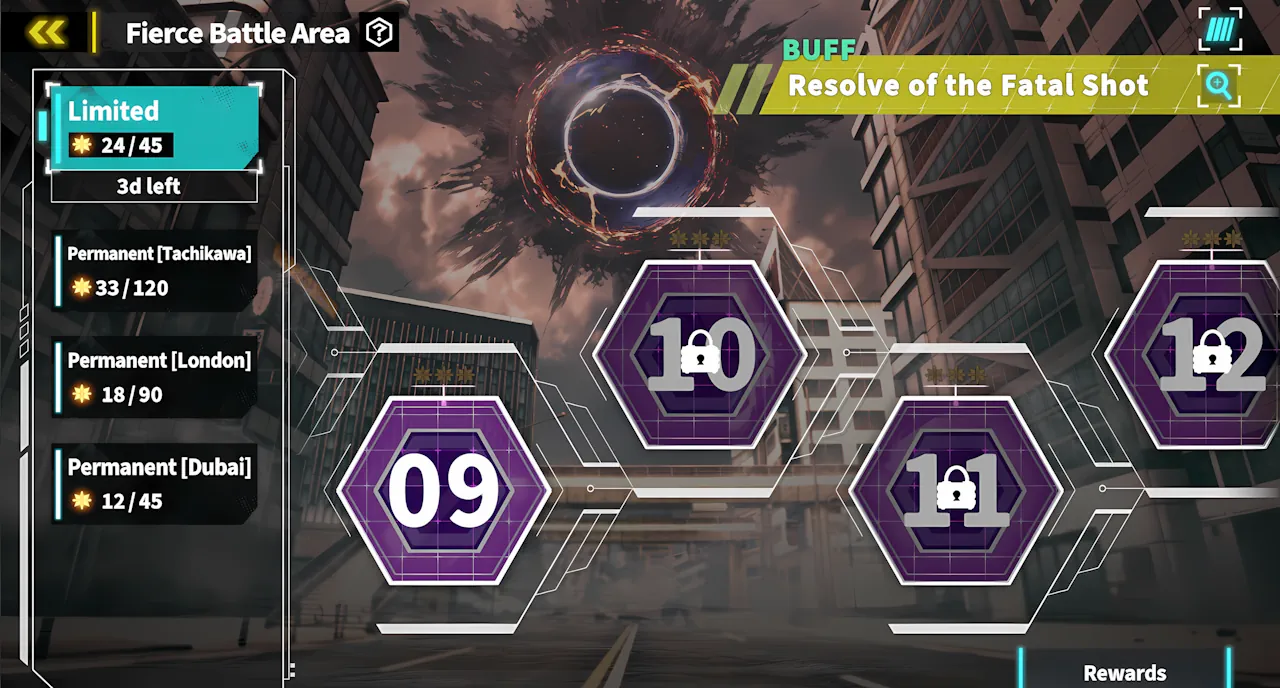
How Fierce Battle Arena Works

Fierce Battle Arena runs across a sequence of stages where enemy difficulty rises steadily. You bring two separate teams, and each must hold its own as stage levels climb. The further you push, the more roster quality matters — not just for raw damage, but for survival and consistent turn cycling.

This is one of the first modes where simply building one strong team stops working. The game forces you to think about how you distribute power across both squads. A strong first team paired with a weak second team will stall out around the midpoint, where the gap in stats becomes unforgiving.

Check the Tier List to identify which units give you the most value per investment slot, especially for your second squad.

Level Thresholds

Fierce Battle Arena is heavily level-gated. Enemy stages scale by level, and the gap between your units and enemy level is one of the biggest difficulty multipliers in the mode. Large jumps in difficulty almost always come from enemy level scaling, not from new mechanics.

As a rough reference: Stage 12 enemies sit around level 69, Stage 13 rises to around level 71, Stage 14 to around level 73, and the final stage is a meaningful step up from all of them. A level 60 team may struggle with content that a level 70 team handles cleanly. This means leveling efficiently is more important than any gear optimization in early progression.

It is better to have four level 70 characters than eight level 50 characters. Two strong units can carry a weak team. Four weak units cannot.

This rule defines the best investment path for the mode. Focus depth over width — bring a smaller number of well-leveled units rather than spreading resources across a wide roster. For equipment decisions that complement this approach, see the Uniparts guide.

Core Strategy: Four Strong Units First

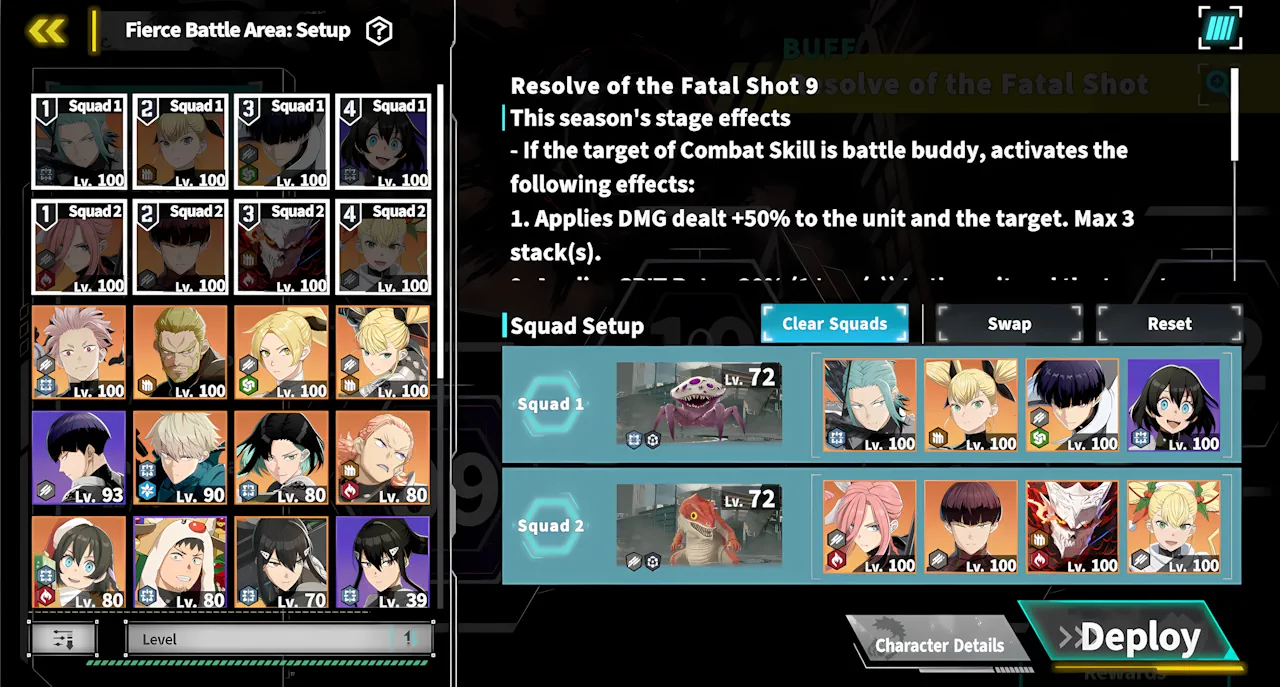
The most efficient progression path is not building eight complete units. It is building four strong core characters and splitting them 2-and-2 across both teams. The remaining two slots per team can be filled with secondary units that simply complete the formation.

This works because your strongest units carry the damage and most of the turn pressure, while the secondary units exist to absorb hits, apply passive effects, or cycle skills on lower-priority turns. In early and mid progression, this division of labor is more than enough to clear most stages.

The critical shift happens at the final stage, where splitting four carries is no longer sufficient. That is the point where you start needing real depth in your second squad — and where building a wider roster finally pays off.
Team Structure & Key Units

The safest setup for most players is to give one team more offensive pressure and the other more defensive stability. This split lets Team 1 push stages quickly while Team 2 survives longer encounters through control and defensive anchoring.

Fierce Battle Arena rewards certain unit archetypes more than others. The mode's level-gated structure and longer fights mean raw burst is less reliable than sustained output, control, or defensive anchoring. Below are the unit types that matter most for filling those slots.

Control / Freeze Units

The strongest support tool available. Freeze and turn denial give weaker teams room to survive, cycle skills, and win slower fights that would otherwise be unwinnable by damage alone. Prioritize at least one control unit in Team 2.

Kafka

One of the best early progression carries for the mode. Easy to build, receives free copies through progression, his weapon is easy to upgrade, and he scales well without heavy investment. The safest first carry for Arena.

Tanks and Defensive Anchors

A strong tank dramatically improves survivability for your weaker squad. One tank in Team 1 often outperforms an extra DPS slot when stats are not ideal — it protects fragile secondary units and stabilizes long fights.

DoT Units

Damage-over-time units add passive pressure while your team cycles actions and control effects. In longer Arena fights, DoT accumulates and helps weaker squads secure kills without relying on burst windows.

For a full breakdown of which characters fill these roles best, see the Characters page.

Priorities and Checklist

Fierce Battle Arena is not a mode you optimize through complex rotations. It is a mode you optimize through correct investment and smart team splitting. Most of the difficulty comes from account structure decisions made before the fight starts.

01

Build four strong units first. Split them 2-and-2. Fill remaining slots with secondary units. This is enough for most of the mode.

02

Prioritize level thresholds over wide roster investment. Meeting enemy level matters more than optimizing gear on underleveled units.

03

Put a control unit in your weaker second squad. Freeze and turn denial compensate for stat gaps and make survival much more consistent.

04

Anchor one team with a tank. A defensive unit protects fragile secondary slots and makes longer fights stable without demanding perfect play.

05

Use Kafka as an early progression carry. Free dupes, easy weapon, strong scaling. One of the most efficient investments for Arena before endgame.

06

Add DoT or utility for longer fights. Passive damage accumulates and helps weaker squads secure kills when burst is unavailable.

07

Expand your roster only after your first four units are stable. The final stage is where roster depth starts mattering — not before.

If Total War tests roster depth, and Large Conquest tests AoE tempo, then Fierce Battle Arena is the game's early roster management check — and mastering it will make the rest of the game much easier.